Geluks training booklet
For CronosKids, I designed and illustrated a workbook for the Gelukstraining, a happiness training program aimed at helping children and parents explore happiness, emotions, and personal growth together. The training focuses on building self-confidence, gratitude, positive thinking, and emotional awareness through shared experiences, reflection, and play.
The content and structure of the training were developed by the CronosKids team. My role was to translate this content into a warm, accessible, and engaging visual experience through layout, illustration, and graphic design.
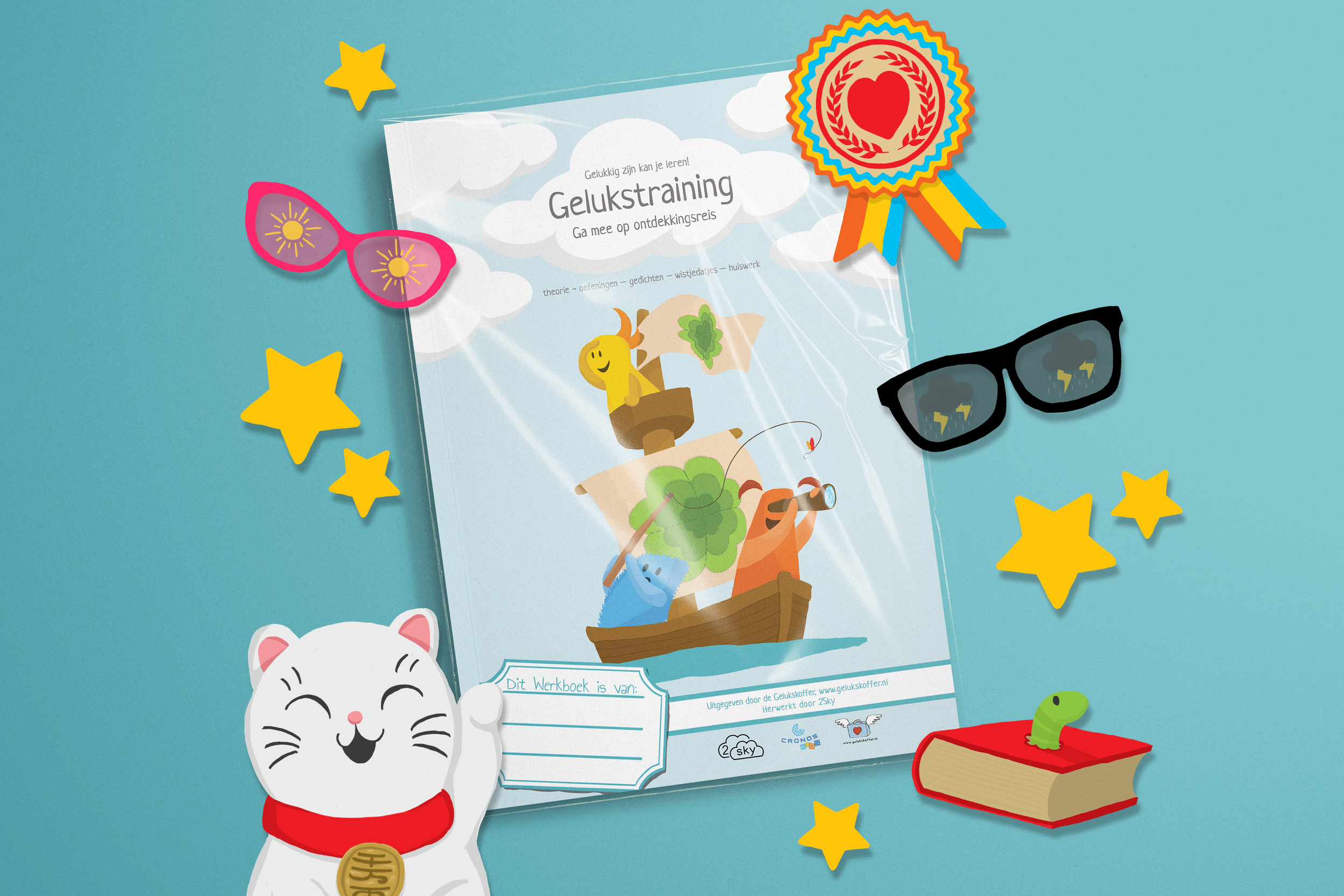
The “Gelukstraining” booklet
The Challenge
The Gelukstraining workbook covers a lot of meaningful but sometimes complex topics: emotions, self-image, gratitude, dreams, and resilience. These themes needed to be approachable for children, supportive for parents, and clear enough to guide families through multiple sessions without feeling overwhelming or heavy.
The challenge was to create a visual language that could:
support emotional topics without becoming too serious,
invite children to participate actively,
and encourage parents and kids to explore these themes together.
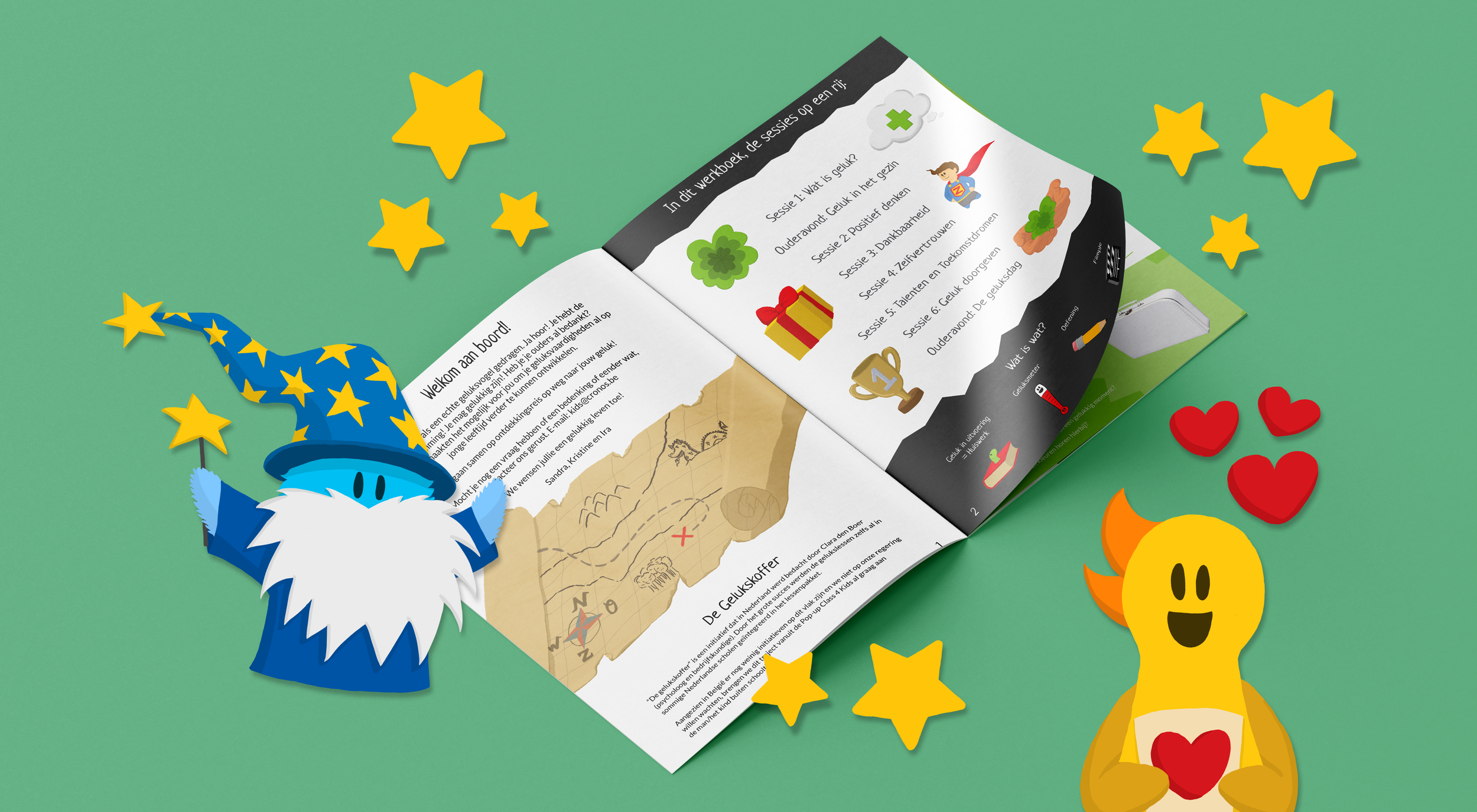
The Index of the booklet
Design Approach
From the start, I approached the booklet as a guided journey rather than a traditional workbook. The sessions are framed as an adventure, with recurring characters, visual metaphors, and playful elements that make the learning process feel safe and inviting.
I created all illustrations and handled the full layout design, making sure each session had:
a clear visual rhythm,
plenty of breathing space for writing and reflection,
and illustrations that subtly reinforce the emotional theme of each session.
Friendly, soft characters appear throughout the booklet to guide children through exercises, normalize difficult feelings, and add moments of lightness when topics become more introspective.
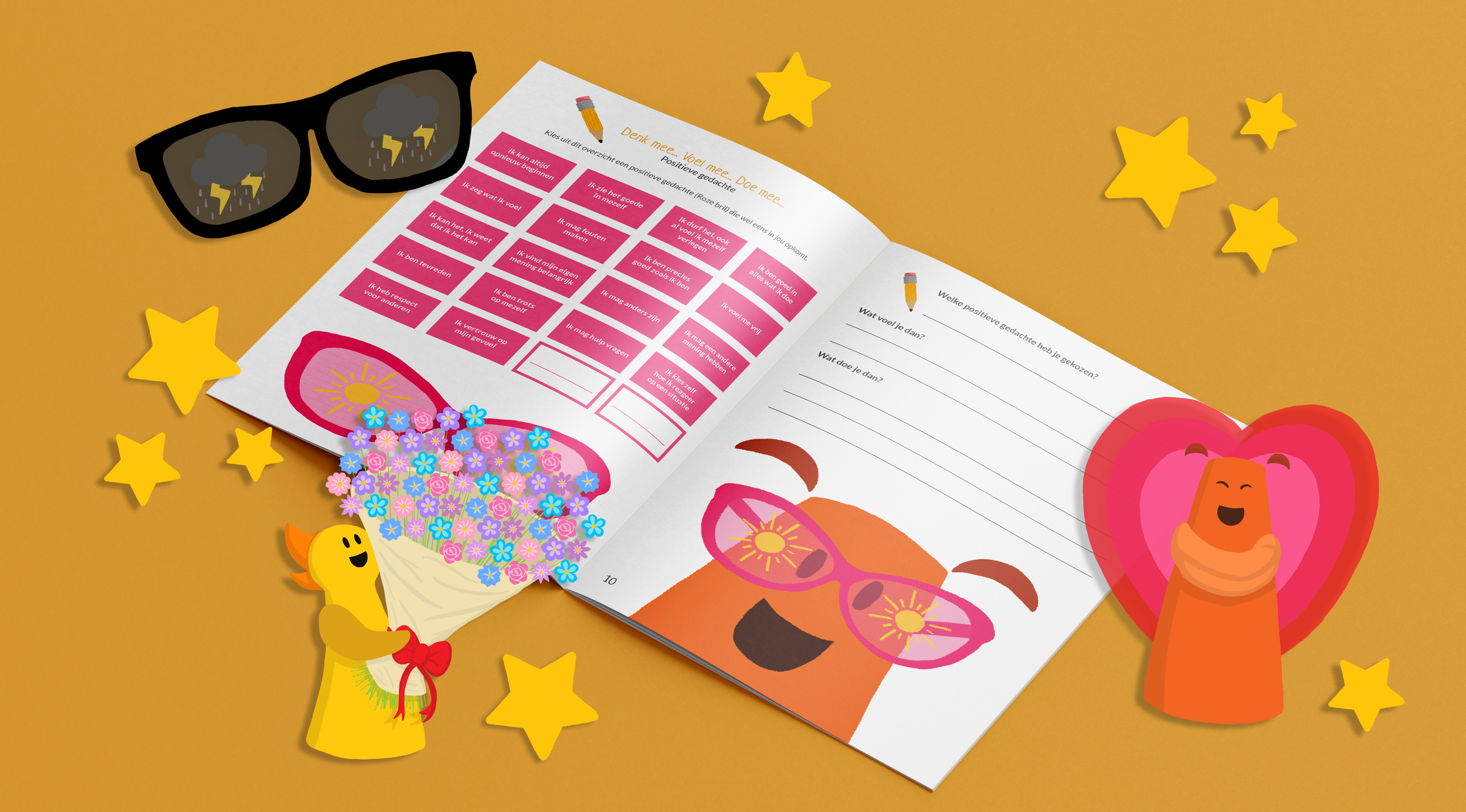
The positive thinking toughts page
Visual Storytelling & Accessibility
Each session combines theory, exercises, reflection questions, and playful assignments. My goal was to visually separate these elements clearly, so users always know where they are and what is expected of them. Icons, color accents, and recurring illustration styles help structure the content without relying heavily on text.
The illustrations often act as emotional anchors: they help children recognize feelings, reflect on thoughts, and engage with abstract ideas like gratitude or self-worth in a tangible way. This makes the workbook accessible not only for confident readers, but also for younger children or those who struggle with expressing emotions verbally.
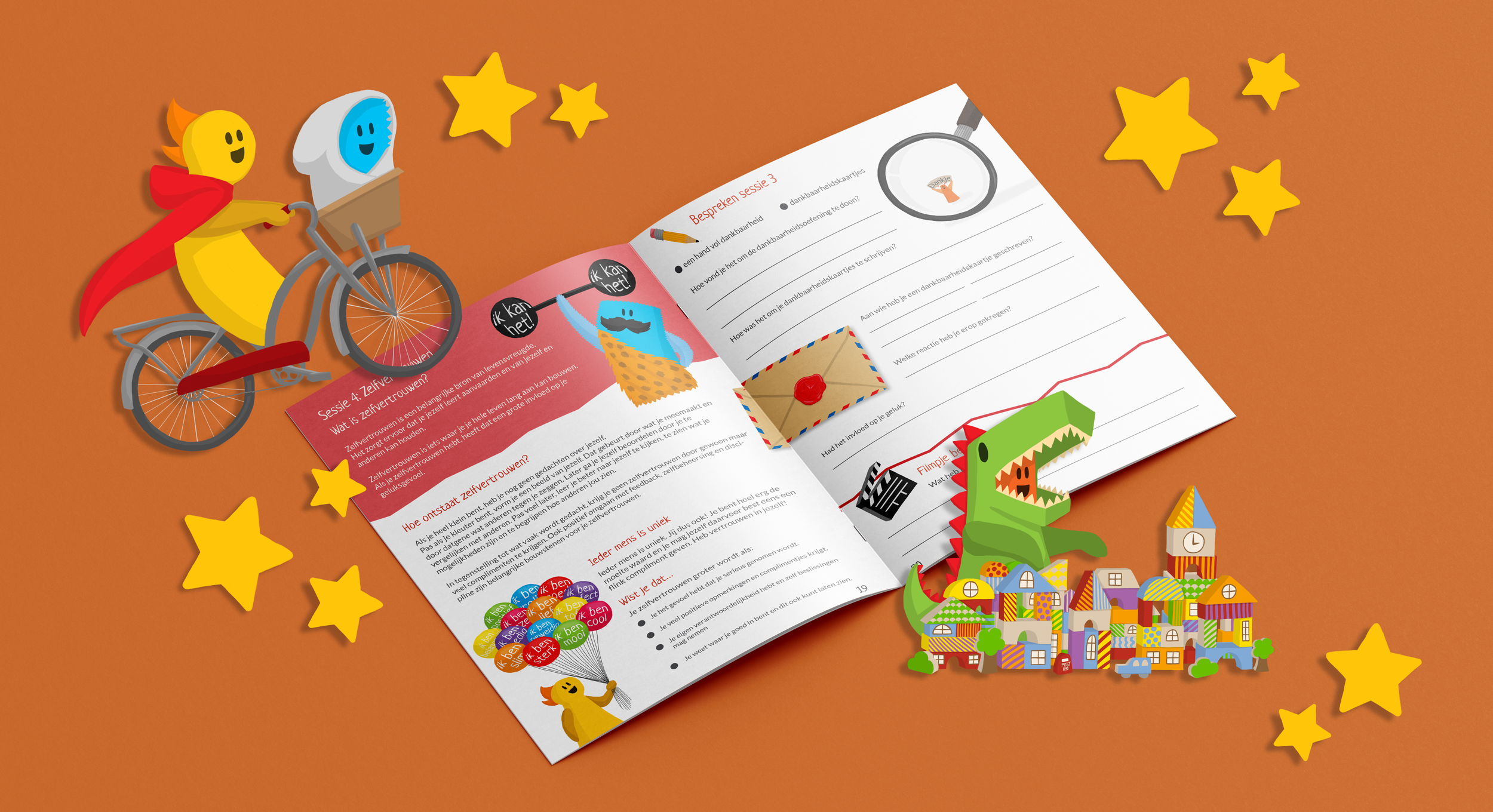
The start of session 4 ‘Self-confidence’
Supporting Connection Between Parents and Kids
A key part of the Gelukstraining is the shared experience between parents and children. Many exercises are meant to be done together or discussed at home. The design supports this by keeping the tone warm and non-judgmental, and by creating moments that invite conversation rather than instruction.
The layout encourages slowing down, talking things through, and returning to earlier pages—turning the booklet into something that lives alongside the family throughout the training, instead of a one-time worksheet.
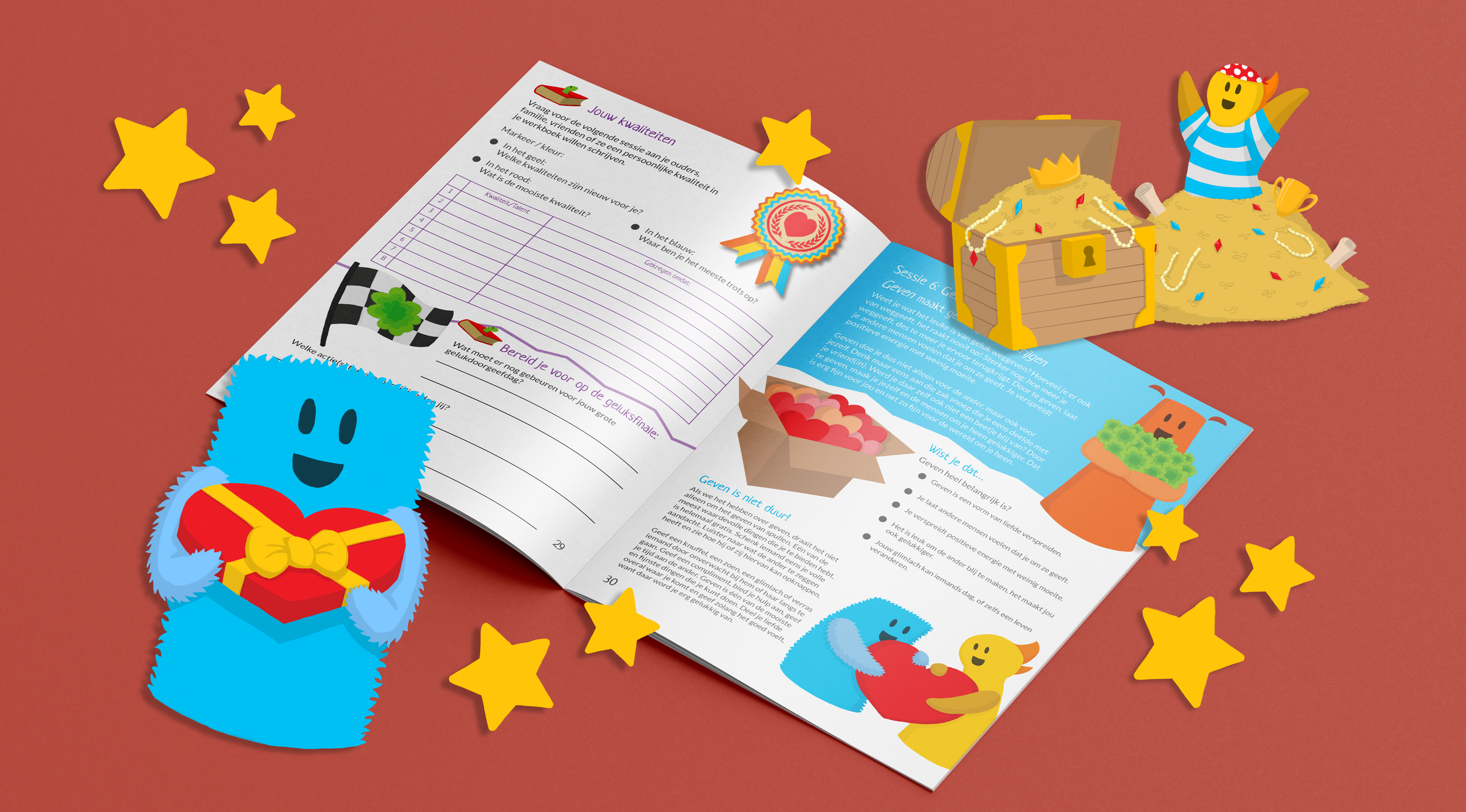
Start of session 6 “Sharing happiness”
The Result
The final booklet is a playful, gentle, and emotionally supportive tool that helps families navigate the Gelukstraining together. The visual design reinforces the values of the program: curiosity, kindness, self-reflection, and growth.
By translating the CronosKids content into a clear and inviting visual language, the Gelukstraining workbook becomes more than just a collection of exercises—it becomes a safe space for children and parents to explore happiness together, at their own pace.